
Mattress Size Guide by Weight: Finding Your Perfect Support
Have you ever woken up with aches and pains, wondering why your mattress feels more like an enemy than a friend? Many of us focus on firmness or materials, but the real key to restorative sleep often lies in a factor we overlook: weight distribution. Your body weight and shape are critical in determining the right mattress size for comfort, support, and longevity.
This guide will explore the crucial connection between your weight, mattress size, and overall sleep quality. We'll uncover how the right choice can prevent sagging, alleviate pressure points, and give you the support you need night after night. Understanding this relationship is the first step, but for a truly personalized answer, you can always use a smart tool to find the perfect fit. To get a data-driven recommendation, try our free tool and discover the ideal mattress size for your unique needs.

Understanding Weight Distribution in Mattress Design
Weight distribution isn't just a technical term; it's the core principle of how a mattress supports you. An ideal mattress spreads your body weight evenly across its surface. This prevents any single area from bearing too much pressure, which often causes tossing, turning, and waking up sore.
When a mattress fails to distribute weight properly, it creates pressure points, especially around the hips, shoulders, and lower back. Over time, this disruption not only affects your sleep but also causes the mattress to wear down unevenly, leading to premature sagging and a loss of support. A well-designed mattress considers this from the start.
The Science of Support Zones and Pressure Points
Modern mattresses often feature "support zones." These are areas specifically engineered to be firmer or softer, accommodating the natural curves and weight of the human body. For example, the center third of a mattress might be reinforced to provide extra support for the hips and lumbar region, where most of our weight is concentrated.
Without these zones, a heavier person might find their hips sinking too far into the mattress, throwing their spine out of alignment. Conversely, a lighter person might not be heavy enough to engage the support layers, making the mattress feel too hard. Proper zoning ensures that your spine remains in a neutral position, regardless of your body type.
How Mattress Materials Respond to Different Body Weights
Different materials handle weight in unique ways. Understanding how they perform is key to finding the right match for your body.
- Memory Foam: This material contours closely to your body, offering excellent pressure relief. However, for heavier individuals, a low-density foam can "bottom out," failing to provide adequate support. Higher-density foams are essential for providing a supportive yet conforming feel.
- Innerspring: Traditional coil systems provide a bouncy, supportive feel. Heavier individuals should look for mattresses with thicker, lower-gauge coils and a higher coil count for durability and robust support.
- Latex: Known for its responsive and supportive properties, latex offers a balance of comfort and push-back. It's often a great choice for various body weights because it resists sagging and distributes weight effectively.
- Hybrid: Combining coils with foam or latex layers, hybrid mattresses aim to offer the best of both worlds. The coil base provides sturdy support for heavier weights, while the comfort layers deliver pressure relief.
Mattress Size Considerations for Various Body Types
While materials are important, the sheer surface area of your mattress plays a huge role in support. A larger mattress provides more space for your body to spread out, allowing for better weight distribution and reducing the strain on any single part of the mattress structure.
For couples, this is even more critical. A mattress that's too small forces both sleepers toward the center, concentrating weight and increasing the likelihood of disturbing each other's sleep. Choosing the right size is an investment in both comfort and the mattress's lifespan.
When Standard Mattresses Fall Short: Weight Capacity Limits
Every mattress has a recommended weight capacity, though manufacturers don't always advertise it clearly. A standard Twin or Full mattress is typically designed to support an average-weight single sleeper. Pushing a mattress beyond its intended limit can lead to rapid deterioration.
If you are a heavier individual or a couple, exceeding a mattress's weight limit will cause materials to break down faster, coils to lose their tension, and foams to develop permanent indentations. This is why considering a mattress specifically designed for higher body weights is often a wise choice.
Queen vs King: Making Room for Proper Weight Distribution
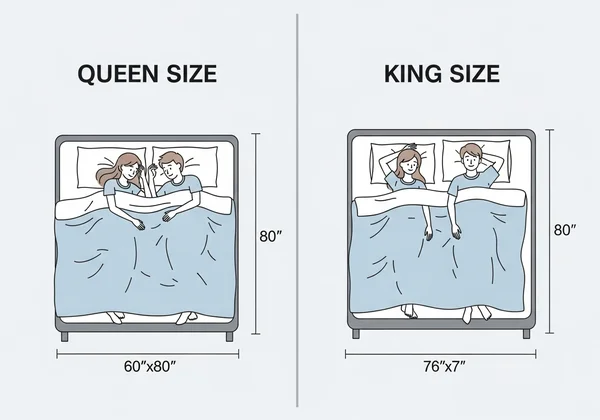
For couples or individuals who want more space, the choice often comes down to a Queen or a King. While a Queen is a popular choice, a King size bed offers significantly more surface area. A standard King is 16 inches wider than a Queen.
This extra width is invaluable for proper weight distribution, especially for two people. It allows each person to have their own space without impacting the support on the other side. This reduces motion transfer and prevents the "roll-together" effect that can happen on a smaller, sagging mattress. For heavier couples, a King is almost always the superior choice for long-term support.
The Role of Mattress Thickness in Supporting Different Weights
Mattress thickness, or profile, is another key factor. A thicker mattress generally contains more support and comfort layers. For individuals over 230 pounds (approx. 104 kg), a mattress that is at least 12 inches thick is recommended.
A thicker profile ensures that you won't sink through the comfort layers and hit the firm support core, which can be uncomfortable. It provides deeper compression support, allowing the mattress to contour to your body without sacrificing its foundational structure. Thinner mattresses (under 10 inches) are typically better suited for lighter individuals or children.
Body Type Mattress Support: Beyond Just Weight
Your body weight is just one part of the equation. Your height, body shape, and preferred sleeping position all influence how you interact with your mattress and what you need for optimal support.
A tall person has different needs than a shorter person of the same weight, as their weight is distributed over a larger area. Similarly, a person with wider hips will need different support than someone with a straighter frame. A personalized approach is the only way to find the perfect match. Finding the right mattress support for your body type is simple with our intelligent tool.
Sleep Position and Weight Distribution: Finding Your Balance
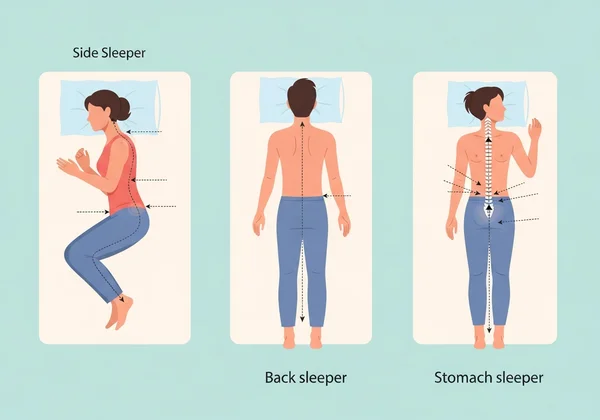
Your sleeping style dramatically changes where your body puts pressure on the mattress.
-
Side Sleepers: This position places significant pressure on the shoulders and hips. They need a mattress that is soft enough to cushion these joints but supportive enough to keep the spine aligned.
-
Back Sleepers: Their weight is more evenly distributed, but they require firm support for the lower back to prevent it from sinking into a "hammock" position.
-
Stomach Sleepers: This is the most challenging position for spinal alignment. They need a firm surface to keep their hips from sinking too low, which can strain the spine and neck.
The Athlete's Dilemma: Supporting Muscle Mass and Joint Pressure
Athletes often have higher muscle mass, which means they are denser and heavier than non-athletes of the same size. They require a mattress that offers both exceptional support for their weight and targeted pressure relief to help muscles recover.
A responsive mattress, like a latex or hybrid model, can be ideal. It supports the body without causing the "stuck" feeling of some memory foams, making it easier to change positions. The goal is to find a mattress that aids in recovery, not one that causes more strain.
Curves and Conformity: Mattress Support for Different Body Shapes
Body shape plays a significant role in mattress needs. Individuals with curvier figures, such as a classic hourglass shape, have larger gaps between their body and the mattress when lying down. They need a mattress with soft comfort layers that can fill these gaps, particularly around the lumbar region, to provide even support.
In contrast, individuals with a straighter body shape may find that a firmer mattress provides adequate support without excessive contouring. The key is to find a surface that conforms to your unique shape, keeping your spine perfectly aligned.
Maximizing Mattress Longevity Through Proper Weight Distribution
Choosing the right mattress size and type for your weight isn't just about nightly comfort—it's about protecting your investment. A mattress that is properly matched to its user will last significantly longer.
Poor weight distribution is the number one cause of premature wear. When a mattress is constantly under more stress than it was designed for, its materials degrade quickly. By ensuring your weight is spread evenly, you help the mattress wear uniformly and maintain its supportive qualities for years to come.
Common Signs of Poor Weight Distribution and Premature Wear
Be on the lookout for red flags that indicate your mattress is struggling to support you. These include:
- Visible Sagging: A noticeable indentation in the middle of the bed or where you sleep.
- Body Impressions: Lingering indentations that don't disappear after you get out of bed.
- Waking Up Sore: Consistent morning aches in your back, neck, or hips.
- Increased Motion Transfer: Feeling every toss and turn from your partner more than you used to.
Reinforcement Technologies for Enhanced Support
To combat wear and tear, especially for heavier sleepers, many manufacturers incorporate reinforcement technologies. This can include a reinforced central third of the mattress with denser foam or stronger coils. Another common feature is robust edge support, which uses a perimeter of high-density foam or steel rods.
Strong edge support increases the usable sleeping surface and prevents the feeling of rolling off the side. When looking for a durable mattress, these features are excellent indicators of a well-built product designed for longevity.
Finding the right mattress isn't just about shopping—it's about crafting your perfect sleep sanctuary. Your weight, body shape, and how you sleep all play crucial roles in getting truly restful sleep. A larger mattress size like a King often provides superior weight distribution for couples and heavier individuals, while a thicker profile ensures deep-down support. Remember that the right materials and construction are just as important as the size.
By understanding how these elements work together, you can avoid common pitfalls like premature sagging and morning aches. You can move beyond generic advice and find a sleep solution that feels like it was made just for you. Your sleep deserves more than guesswork. Let our smart system analyze your unique data to take the guesswork out of your decision. To find the perfect mattress size tailored to your body and sleep preferences, get your recommendation on our homepage today.
Frequently Asked Questions About Mattress Size and Weight Support
What is the maximum weight capacity for standard mattress sizes?
While it varies by brand and model, a general guideline is that standard Queen and King mattresses are often designed to support up to 500-600 pounds total weight (or 250-300 pounds per side). However, many brands now offer heavy-duty models designed to support 1,000 pounds or more. Always check the manufacturer's specifications.
How does my sleeping position affect the ideal mattress size for my weight?
Your sleeping position influences how much space you need. Side sleepers and combination sleepers who change positions frequently often benefit from a wider mattress (like a Queen or King) to avoid feeling confined. Back and stomach sleepers may not need as much width, but they must ensure the mattress is firm enough to support their weight without sagging in the middle.
Can a mattress be too firm for a heavier person?
Yes, absolutely. While support is crucial, a mattress that is too firm won't allow your shoulders and hips to sink in slightly, which can misalign your spine and create painful pressure points. Heavier individuals often need a "firm" support core combined with a thicker, medium-firm comfort layer to get the right balance of support and cushioning. For personalized advice, use our tool.
Will a larger mattress automatically provide better weight distribution?
Generally, yes. A larger surface area, such as a King or California King, gives your body more room to spread out, which naturally improves weight distribution and reduces pressure on the mattress core. For couples, it is especially beneficial as it isolates motion and provides ample personal space for each sleeper.
How often should I replace my mattress if I'm above average weight?
If you are a heavier individual, your mattress may experience more wear and tear. A high-quality mattress designed for higher body weights might last 7-10 years. However, a standard mattress that isn't suited for your weight may show signs of sagging and support loss in as little as 3-5 years. Rotating your mattress regularly can help extend its life.