
Mattress Size for Elderly: Comfort & Accessibility Guide
As we age, our sleep needs change dramatically. Finding the right mattress size isn't just about comfort—it's about maintaining independence, safety, and well-being. For seniors and their caregivers, navigating the world of accessible bed options can feel overwhelming. How do you choose a mattress that is both comfortable and safe?
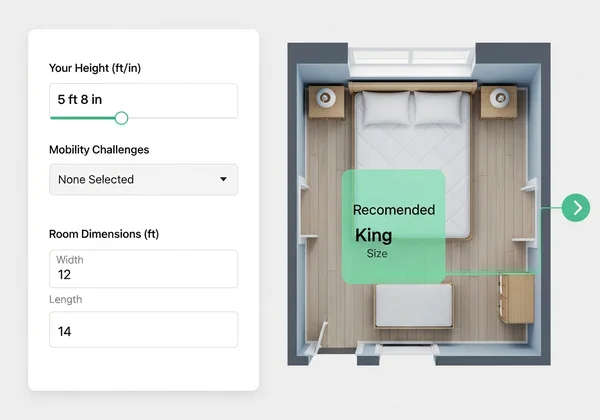
This guide breaks down the essentials of mattress selection for seniors, making it easier to find the perfect fit. We'll explore how the right dimensions, bed height, and accessibility features create a sleep environment that supports mobility without sacrificing comfort. Instead of guessing, you can make an informed decision. For personalized advice, you can always try our free tool to find a size tailored to your specific needs.

Understanding Senior Mattress Requirements for Better Sleep
Choosing a mattress for an elderly person goes far beyond standard comfort preferences. It involves a thoughtful assessment of physical changes, mobility levels, and safety requirements. Understanding these unique factors is the first step toward creating a truly supportive and secure sleep space.
Mobility Challenges and Bed Height Requirements
For many seniors, getting in and out of bed can be a daily challenge. A bed that is too high or too low can increase the risk of falls and strain on joints. The ideal bed height allows the user to sit on the edge of the mattress with feet flat on the floor and knees at a 90-degree angle. This creates a stable base for safely standing up or lying down. Combining the right mattress thickness with an appropriate bed frame is crucial for achieving this optimal height.
Common Age-Related Sleep Position Considerations
Sleep positions often change with age due to issues like arthritis, back pain, or respiratory conditions. While some may continue to sleep on their back or stomach, many seniors find side sleeping more comfortable as it can alleviate pressure on the spine and hips. The chosen mattress size must accommodate these positions without making the sleeper feel cramped. For example, a wider bed may be necessary for those who shift frequently or use pillows to support their neck and knees.
Safety Features for Independent Living
A safe sleep environment is essential for promoting independence and providing peace of mind for both seniors and their caregivers. This includes ensuring the mattress is firm enough at the edges to prevent roll-offs and provide stable support when sitting. Furthermore, the bedroom layout should allow clear, unobstructed pathways around the bed. A mattress size that is too large for the room can create hazards and limit mobility, undermining the goal of safe, independent living.
Optimal Mattress Dimensions for Seniors
Once you understand the specific needs of an aging sleeper, you can start exploring which mattress dimensions are the most suitable. It’s not always about choosing the biggest size; it’s about finding the perfect balance between space, safety, and accessibility.
Standard Bed Sizes vs. Accessibility Needs
Standard mattress sizes like Queen and King are popular, but they may not always be the best choice for seniors. A very wide bed can make it difficult for a caregiver to assist from the opposite side. It can also be challenging for a single sleeper to get in and out if they have to scoot across a large surface. Accessibility needs often prioritize ease of movement over sheer size. It's important to weigh the benefits of extra space against the practicalities of daily use and assistance.
When to Choose Full vs Queen for Aging in Place
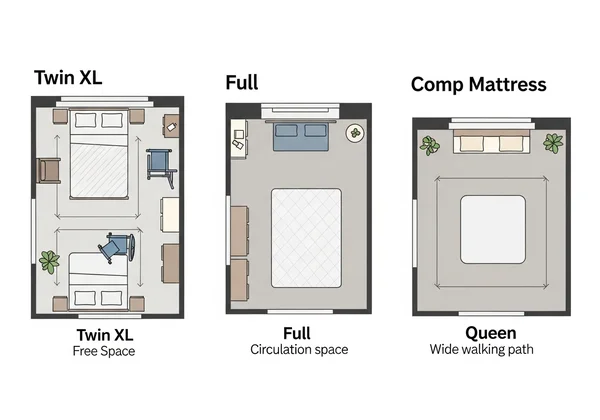
A Full size mattress (54" x 75") can be an excellent option for a single senior who wants to "age in place." It provides enough room to sleep comfortably without being so large that it overwhelms a smaller bedroom. This size leaves ample space around the bed for walkers, bedside commodes, or other medical equipment.
A Queen size mattress (60" x 80") is often better for couples or individuals who need extra length and width. However, before choosing a Queen, carefully measure your bedroom. Ensure there's at least 3 feet of clear space on the sides of the bed for easy entry and exit. If you're unsure which is right for your space, our smart recommendation tool can help you visualize the fit.
The Benefits of Twin XL for Seniors with Limited Space
For seniors in assisted living facilities or smaller bedrooms, a Twin XL mattress (38" x 80") offers a fantastic solution. It has the same width as a standard Twin but provides an extra 5 inches of length. This added length is crucial for taller individuals and prevents their feet from hanging off the edge. Its compact width maximizes floor space, which is vital for mobility and accommodating equipment like wheelchairs or lift chairs. A Twin XL is often compatible with adjustable bed bases, further enhancing its suitability for elderly users.
Bed Setup for Maximum Accessibility
The mattress itself is only one part of the equation. How you set up the entire bed system—including the frame, thickness, and surrounding layout—plays a critical role in ensuring safety and accessibility for elderly sleepers.
Bed Frame Height Considerations
The bed frame determines the overall height of the sleep surface. A low-profile frame can be a great choice for seniors, as it lowers the mattress to a more manageable height, reducing the risk of injury from falls. For users who have difficulty standing up from a low position, a higher frame might be better. The key is to match the frame height with the mattress thickness to achieve that ideal "feet-flat-on-the-floor" position. Adjustable bed bases are also excellent frames, as they can be raised and lowered as needed.
Mattress Thickness and Transfer Safety
Mattress thickness directly impacts the final height of the bed. While a thick, plush mattress might seem luxurious, it can make getting in and out of bed difficult and unsafe. A mattress between 8 and 12 inches thick is often ideal for seniors. This range typically provides sufficient comfort and support without creating an excessively high surface. A firm edge is also a critical safety feature, providing a stable surface to push off from when standing up.
Bedroom Layout for Safe Mobility
The best mattress can become a hazard if the bedroom is cluttered. When choosing a mattress size, consider the entire room. Ensure there is a clear, well-lit path from the bed to the door and the bathroom. A larger mattress in a small room can create tight spaces and trip hazards. Before finalizing a size, use a tape measure to map out the bed's footprint and ensure at least 3 feet of open space around the sides. This simple step is vital for safe mobility, especially during nighttime trips.
Technology and Features Enhancing Senior Sleep
Modern advancements in mattress and bed technology offer incredible benefits for older adults. From adjustable positions to pressure-relieving materials, these features can significantly improve sleep quality, comfort, and safety.
Adjustable Bases and Mattress Compatibility
An adjustable bed base is perhaps the most valuable addition for a senior's bedroom. It allows the head and feet to be raised independently, which can help with issues like acid reflux, snoring, and swelling in the legs. Sitting up in bed to read or eat also becomes much easier. When choosing this option, ensure your mattress is compatible. Most memory foam, latex, and hybrid mattresses work well with adjustable bases, but traditional innerspring mattresses often do not.

Pressure Relief Technologies for Aging Bodies
As we get older, our skin becomes more fragile and our bodies more sensitive to pressure points. Mattresses made from materials like memory foam or latex excel at contouring to the body's curves, distributing weight evenly, and relieving pressure on the hips, shoulders, and back. This can reduce tossing and turning, leading to deeper, more restorative sleep. These materials can also help improve circulation, which is another common concern for seniors.
Monitoring Systems for Peace of Mind
For caregivers, technology now offers peace of mind. Some modern beds and mattress pads come with integrated sleep monitoring systems. These devices can track heart rate, breathing, and movement throughout the night without requiring the user to wear any device. Alerts can be sent to a caregiver's smartphone if unusual patterns are detected. This non-intrusive monitoring provides an extra layer of safety and reassurance for everyone.
Your Next Steps in Creating an Accessible Sleep Environment
Selecting the right mattress for an elderly family member can significantly enhance their comfort, safety, and independence in daily life. By considering mobility needs, bed height, and room layout, you can create a sleep space that is both comfortable and secure. Remember, the goal is to balance personal comfort with practical accessibility.
Ready to find the perfect fit? Don't leave it to guesswork. Use our mattress size tool to input specific mobility needs, height, and bedroom dimensions. Our system will provide personalized suggestions to help you create a truly accessible sleep space.
Frequently Asked Questions About Mattress Sizes for Seniors
What is the best bed height for elderly adults to prevent falls?
The ideal bed height allows the person to sit on the edge with their feet flat on the floor and knees at a 90-degree angle. This typically results in a total bed height (frame + mattress) of 20 to 23 inches from the floor, but it should be personalized to the user's height.
How does a low-profile bed affect mattress choice for seniors?
A low-profile bed frame is an excellent safety feature. It allows you to use a thicker, more comfortable mattress (e.g., 10-12 inches) while keeping the overall bed height in a safe range for getting in and out of bed easily.
What size bed is best for couples where one partner has mobility issues?
A split king (two Twin XL mattresses side-by-side) is often the best solution. This setup allows each partner to have a mattress and adjustable base suited to their individual needs. For example, one side can be firmer or adjusted to a different position without disturbing the other person.
Are memory foam mattresses better for elderly sleepers?
Memory foam mattresses are often an excellent choice because they excel at pressure relief, which can soothe sore joints and reduce pain. They also absorb motion, so a partner's movements are less likely to disturb sleep. To find a size that works for you, you can get a recommendation on our homepage.
How can I make my current mattress more accessible as I age?
If a new mattress isn't an option, you can add safety features. Bed rails can provide support for getting in and out of bed. If the bed is too high, you can switch to a lower-profile bed frame or a "bunkie board" instead of a box spring. A sturdy step stool with a handrail can also help, but a bed at the proper height is the safest solution.