
Mattress Size by Weight: Finding Your Perfect Fit
When most people go shopping for a new bed, they usually start by measuring their bedroom walls. While the size of your room is important, there is another "silent" factor that determines whether you will actually wake up feeling rested. That factor is your body weight. Choosing the right mattress size by weight is about more than just fitting in the room; it is about ensuring the mattress can support your body properly for years to come.
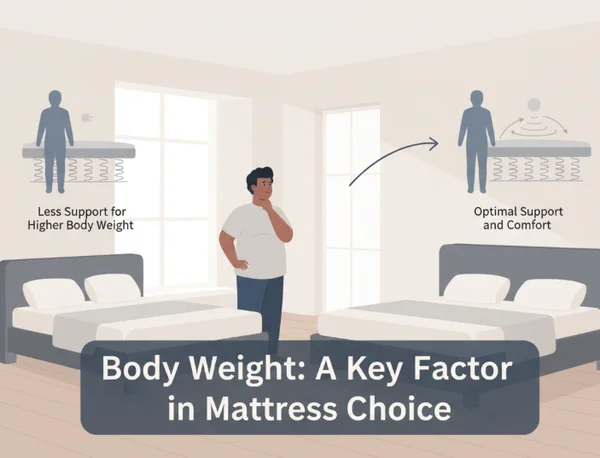
Many people struggle with back pain or poor sleep simply because their mattress is too small for their physical needs. How does your weight affect which mattress size you should choose? It comes down to how your weight is distributed across the surface of the bed. If you choose a bed that is too narrow, your weight is concentrated in a small area, which can lead to sagging and discomfort.
Our sleep experts believe that sleep should be personalized. Picture this: a mattress that contours perfectly to your frame while providing rigid support exactly where you need it. Before you buy your next bed, you can try our tool to get a recommendation based on your specific height, weight, and sleeping habits. In this guide, we will break down why weight matters and how to find the perfect mattress dimensions for your body type.
Understanding Weight Capacity by Mattress Size
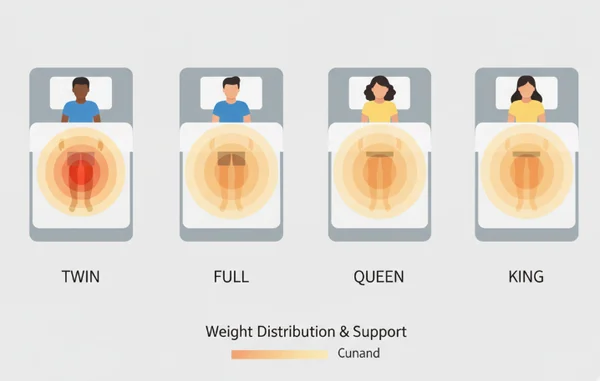
Every mattress size has a general weight capacity. While the materials (like foam or springs) play a role, the physical dimensions of the bed dictate how much weight it can handle without losing its shape. A larger surface area allows for better weight distribution, which protects the mattress and your spine.
Twin and Twin XL: Weight Capacity for Lighter Sleepers
The Twin and Twin XL are the smallest standard sizes. A standard Twin mattress is 38 inches wide and 75 inches long. Because of its narrow width, it is primarily designed for children, teenagers, or single adults with a lighter build.
Most standard Twin beds have a weight capacity of about 250 to 300 pounds. If a sleeper is near this weight limit, the mattress may feel much softer than intended. For taller individuals who are also heavier, the Twin XL provides an extra 5 inches of length. However, the narrow width remains a challenge. If you are a single sleeper with a heavier build, a Twin size might lead to "edge roll-off," where you feel like you are sliding off the side of the bed because your weight is too close to the perimeter.
Full and Queen: Mid-Range Weight Support for Average Sleepers
The Full size (also known as a Double) and the Queen size are the most popular choices for single adults. A full size bed is 54 inches wide, offering significantly more surface area than a Twin. This extra width helps distribute body weight more evenly across the support system.
The Queen size (60 inches wide) is the industry standard for couples and heavier single sleepers. It typically has a weight capacity of 500 to 600 pounds, making it suitable for two average-weight adults or one person who requires extra support. If you weigh over 230 pounds, the Queen size is often the minimum size recommended to ensure the mattress doesn't sag prematurely. To see how these compare, you can view our bed size chart for a side-by-side look at the dimensions.
King and California King: Maximum Weight Distribution for Heavy Sleepers
For the highest level of support and durability, the King and California King are the top choices. A standard King bed is 76 inches wide, which is almost double the width of a Twin. This massive surface area—roughly 6,080 square inches—allows weight to be spread out extremely thin across the mattress surface.
Couples with higher body weights need king-sized stability. Its dimensions evenly distribute weight, preventing uneven wear. The California King is slightly narrower but longer, making it the best choice for very tall, heavier sleepers. Larger beds like these often feature more robust internal support systems because manufacturers assume they will be carrying more weight. This extra "real estate" prevents the deep body impressions that often ruin smaller mattresses used by heavier individuals.
Why Heavier Sleepers Need Larger Mattresses
It is a common misconception that weight only affects the "firmness" of a mattress. In reality, weight impacts the physics of how a mattress works. If you are a heavier sleeper, a larger bed isn't just a luxury; it is a functional necessity for health and mattress longevity.
Pressure Distribution and Spinal Alignment
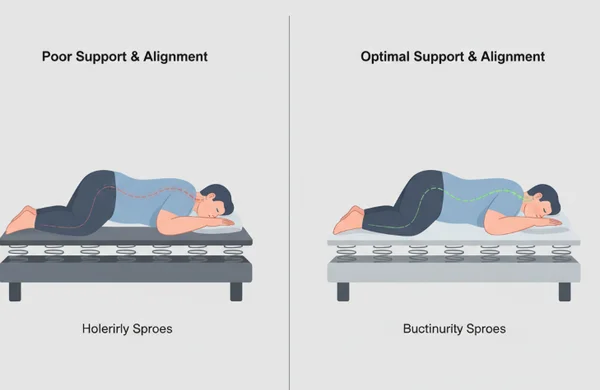
Your mattress must keep your spine neutrally aligned. Heavier sleepers exert extra pressure on comfort layers—especially in smaller beds. In a smaller bed, like a Twin or Full, that pressure is concentrated. This often causes the hips and shoulders to sink too deep, pulling the spine out of alignment.
In a larger bed, the support system has more "room to work." Because the materials aren't being pushed to their absolute limit across the entire width of the bed, they can provide better counter-pressure. This helps in maintaining a straight spine and reducing morning aches. You can compare dimensions on our homepage to see how much extra support space you get when moving from a Full to a King.
Edge Support Challenges in Smaller Beds
Edge support refers to how firm the perimeter of the bed feels. If you sit on the edge of your bed to put on shoes, or if you sleep near the side, you need strong edges. Here’s the thing: heavier sleepers put a significant amount of stress on these edges.
In smaller mattresses, the "usable" sleep surface is actually smaller than the dimensions suggest because the edges often collapse under pressure. This forces the sleeper toward the middle of the bed, which leads to uneven wear. Larger mattresses like the Queen or King typically have reinforced perimeters. For a heavier person, having those extra inches of width means you can stay away from the very edge, ensuring you feel secure and supported all night long.
The Long-Term Durability Factor
Mattresses are an investment. Most are designed to last 7 to 10 years, but weight can shorten this lifespan significantly. A mattress that is too small for the sleeper's weight will develop "valleys" or permanent dips much faster.
When weight is concentrated in one spot night after night, the foam cells break down and the springs lose their tension. By choosing a larger mattress size, you are effectively spreading that wear and tear over a larger area. This is why many experts suggest that "upgrading" your size is actually a way to save money in the long run, as you won't need to replace your mattress as often.
Weight-to-Space Ratio: Balancing Needs and Constraints
We understand that not everyone has a massive master bedroom. Sometimes you have to balance your physical need for a larger bed with the reality of your living space. This is where the weight-to-space ratio comes into play.
When a Full Mattress Might Work Despite Weight
While we generally recommend a Queen or King for heavier sleepers, a Full mattress can work in specific scenarios. If you are a single sleeper who is heavier but not exceptionally tall, a Full size can provide adequate support if the mattress is specifically built for "plus-size" sleepers.
The key is to look for a Full mattress with a high-density foam or a high-coil-count innerspring. However, if you plan on sharing the bed with a partner or a pet, a Full mattress will almost certainly feel cramped and may lack the support needed for two people. To find out if a Full is enough for you, use our tool which considers your bedroom size alongside your weight.
Creative Solutions for Smaller Bedrooms with Heavier Sleepers
Tight on space but need a larger mattress? Optimize your bedroom layout with these clever tricks:
- Remove bulky furniture: Swap a large dresser for an under-bed storage system.
- Use a slim frame: Avoid thick, upholstered headboards and frames that add 5-10 inches to the bed's footprint.
- Center the bed: Sometimes placing the head of the bed against the narrowest wall creates more walking paths.
Prioritizing your mattress size over other furniture is a trade-off, but it is one that pays off in better health and energy levels.
The Trade-Off Guide: Prioritizing Comfort vs. Space
If you are stuck between a smaller room and a bigger bed, ask yourself these three questions:
- How long do I spend in this room awake? If the room is only for sleeping, give the space to the bed.
- Do I wake up with back pain? If yes, you likely need a larger, more supportive mattress surface.
- Does my partner move a lot? Heavier sleepers often feel more "motion transfer." A larger bed (King) minimizes this.
The goal is to find the "Goldilocks" zone—a bed large enough to support your weight comfortably, but not so large that you can't open your bedroom door.
Ready to Transform Your Sleep?
Choosing the right mattress size isn't just about measurements—it’s about matching your body’s needs. Your weight is a primary factor in how a mattress performs. Small beds like Twins are great for space-saving but often fail to provide the support that heavier adults need. Queen and King sizes offer the surface area necessary for proper pressure relief, spinal alignment, and long-term durability.
Don't guess which size is right for you. Use the data available to make an informed choice. To get a custom result tailored to your body type, start your test on our homepage. Our smart recommendation tool takes your height, weight, and sleeping position into account to find the perfect mattress size for your lifestyle.
Common Questions
How much weight can a queen size bed support?
A standard Queen size bed is designed to support between 500 and 600 pounds of total weight. This includes the weight of both sleepers and their bedding. For single sleepers over 250 pounds, a Queen is often the best starting point for comfort. You can see more details on our smart recommendation page.
Is a full bed big enough for two heavier people?
Generally, no. A Full bed only provides 27 inches of width per person, which is the same width as a crib mattress. For two heavier adults, this usually leads to poor support and significant sagging in the middle. A Queen or King is much better for couples.
What mattress size should I get if I weigh over 250 pounds?
If you are a single sleeper over 250 pounds, a Queen size is highly recommended for the extra width and support. If you have the space, a King size is even better as it maximizes weight distribution and mattress life.
Do mattress weight limits include the weight of bedding?
Yes, weight limits usually refer to the "total load" on the mattress. While sheets and pillows don't weigh much, heavy weighted blankets or luxury toppers can add 15-30 pounds. It is always best to choose a mattress size with a capacity slightly higher than your actual body weight to be safe.